Published: October 2026 · Reading time: 11 min · Category: Buyer’s Guides
Why 2026 Is a Turning Point for Packaging Buyers
If you are a brand owner, procurement manager or packaging engineer sourcing custom flexible packaging from Asia…
New regulations. The EU’s Packaging and Packaging Waste Regulation (PPWR) is forcing brands to move toward recyclable, mono-material structures. Non-compliant packaging will face market restrictions.
Cost pressure. Shipping rates, raw material prices (PET, PE, aluminium foil) and currency fluctuations have made “cheap quotes” from trading companies a liability, not an advantage.
Supply chain scrutiny. After years of disruption, buyers want factory-direct relationships — not another layer of middlemen.
This guide is written for buyers who want to source custom flexible packaging from China without expensive trial-and-error. Every section is based on real production data from our factory in Shandong, where we have manufactured pouches and roll film for brands in 80+ countries since 2010.
Mistake #1: Choosing a Trading Company Instead of a Factory
This is the single most expensive mistake in packaging sourcing. Here is why.
A trading company does not own the machines that make your packaging. They take your order, then outsource:
Cylinder engraving → Factory A
Printing → Factory B
Lamination → Factory C
Bag making → Factory D
When colour drifts between reorders, when seals fail, when delivery slips by three weeks — nobody owns the problem. You spend your time chasing multiple parties instead of building your brand.
How to tell the difference in 5 minutes
Question Real Factory Trading Company
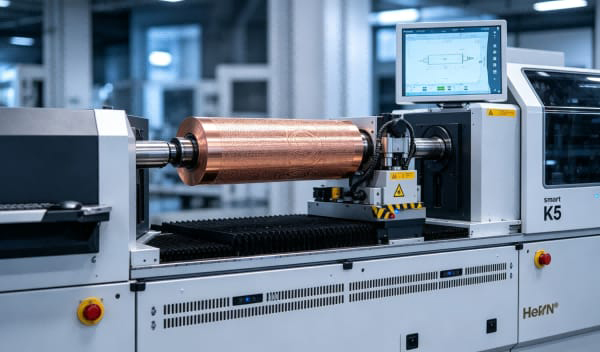
Do you engrave your own cylinders? “Yes, HELL K500 electronic engraving in-house.” “We work with a partner.”
How many print colours? “Up to 10 colours at 300 m/min.” “Whatever you need.”
Can I visit the factory? “Yes, here is our address in Shandong.” “Our office is in Shenzhen.”
MOQ for custom print? “5,000 pcs per size — here is why.” “500 pcs.” (usually means stock film)
At Youpin Pack, we engrave, print, laminate, slit and convert everything under one roof. When you approve a sample, the same team produces your mass order. That is the difference between a supplier and a partner.
Mistake #2: Ignoring the EU PPWR and Mono-Material Shift
If you sell into Europe, you have already heard about the Packaging and Packaging Waste Regulation (PPWR). Its core requirement for flexible packaging is simple:
By 2030, most packaging placed on the EU market must be recyclable — and recyclability is defined by design, not by hope.
Traditional high-barrier structures like PET/AL/PE (with aluminium foil) are excellent for shelf life, but they are not recyclable in existing streams. The industry’s answer is mono-material PE structures such as:
MDO-PE / PE — machine-direction oriented PE laminated to PE
MDOPE / EVOH / PE — for higher barrier needs
PE / PE with high-barrier coatings
These structures can run on existing PE recycling streams and meet PPWR design-for-recycling criteria — while still delivering 9–18 months of shelf life for snacks, coffee, pet food and dry goods.
What to ask your supplier
“Can you supply MDO-PE/PE mono-material structures?”
“What barrier performance (OTR / WVTR) can you achieve without aluminium foil?”
“Can you provide migration test reports for food contact?”
We developed our first recyclable MDO-PE/PE pouch for a US pet treat brand in 2024. It met both their 9-month shelf-life requirement and their public sustainability commitment. Recyclability and performance are no longer a trade-off — but only if your factory has the technical depth to engineer it.
Mistake #3: Sending Your Artwork Before Agreeing on the Material Structure
Here is a conversation we have every week:
Buyer: “Here is my design file. Can you quote 10,000 stand-up pouches?”
Us: “What product are you packing? What shelf life do you need? Is it hot-filled?”
Buyer: “Just give me a price.”
This is how buyers end up with packaging that looks beautiful but fails in the field. The material structure determines:
Barrier — oxygen and moisture protection
Seal strength — especially for greasy or powdery products
Filling method compatibility — hot fill, cold fill, VFFS, hand pack
Recyclability — mono-material vs multi-material
Cost — a 90-micron structure vs a 140-micron structure can differ by 40%
The right order of operations
Tell your supplier: product type, weight, shelf life, filling method, distribution channel (retail / e-commerce / food service).
Supplier recommends 2–3 material structures with cost/barrier trade-offs.
You choose one.
Supplier issues a written specification sheet.
Only then do you send artwork and pay for cylinders.
Skipping step 1–4 costs buyers thousands of dollars in re-engraving and re-printing every year.
Mistake #4: Underestimating the True Cost of a “Cheap” Quote
A quote of $0.08 per pouch vs $0.11 per pouch looks like a 27% saving. But the real cost includes:
Hidden Cost What Happens
Cylinder re-engraving Colour drift on reorder → new cylinders → $800–$2,000
Seal failures Product returns, brand damage, rework
Late delivery Air freight instead of sea freight → 5–10× shipping cost
Compliance failure Customs hold, market withdrawal
Inconsistent colour across SKUs Retail rejection, discounting
A factory-direct supplier with in-house engraving, printing and lamination eliminates most of these hidden costs. The cheapest quote is rarely the lowest total cost.
Mistake #5: Not Planning for the Sampling Stage Properly
Sampling is where 80% of packaging problems are caught — or missed. A proper sampling process looks like this:
Digital proof (24 hours) — verify colour, layout, text, barcode.
Physical printed sample (5–7 working days) — verify material feel, seal strength, zipper/valve function, stand-up stability.
Fill test — run the sample on your actual filling line or hand-pack a real product.
Shelf-life test — if time allows, store filled samples for 30–90 days.
Approve and produce.
Buyers who skip step 2 or 3 often discover problems only after 50,000 pouches are printed. A refundable sampling fee is the cheapest insurance in packaging.
The 2026 Buyer’s Checklist
Before you place a custom flexible packaging order, confirm:
□ Supplier owns engraving, printing, lamination and bag making
□ Written material structure specification provided
□ Compliance documents available (ISO 9001, FDA, EU 10/2011)
□ Recyclable / mono-material option offered
□ Physical sample produced before mass production
□ Lead time confirmed in writing (sampling + production + shipping)
□ Cylinder ownership and storage terms agreed (who owns the cylinders for reorders?)
Why We Wrote This Guide
At Youpin Pack, we have spent 15 years building an integrated flexible packaging factory in Shandong, China. We run German HELL electronic engraving, 10-colour rotogravure printing, solvent-free lamination, multi-format bag making and an in-house QC laboratory — all under one roof.
We wrote this guide because we believe informed buyers make better partners. If you are evaluating suppliers for a custom pouch, spout bag, coffee bag or roll film project, send us your specification. We will reply with:
A recommended material structure
A detailed quotation
A sampling plan
Answers to every question in this guide
No pressure. No vague answers. Just factory-direct information.
[Request a Free Quote →]