When it comes to pet treat packaging, oxidation is one of the biggest challenges for brands and pet owners alike. Recently, I came across a short video on Douyin about why pet treats oxidize so easily. The video was brief, but it nailed the point: pet treats usually contain a high amount of fat and protein. Once they come into contact with oxygen in the air, they gradually begin to oxidize. In mild cases, the aroma fades and the texture worsens. In more serious cases, they turn rancid, develop an unpleasant smell, and can even cause digestive upset in dogs. More importantly, many pet owners pour treats into a bowl and leave them out for days, which speeds up oxidation even further.
But what exactly causes oxidation, and how can the right pet treat packaging prevent it? Let’s break it down.
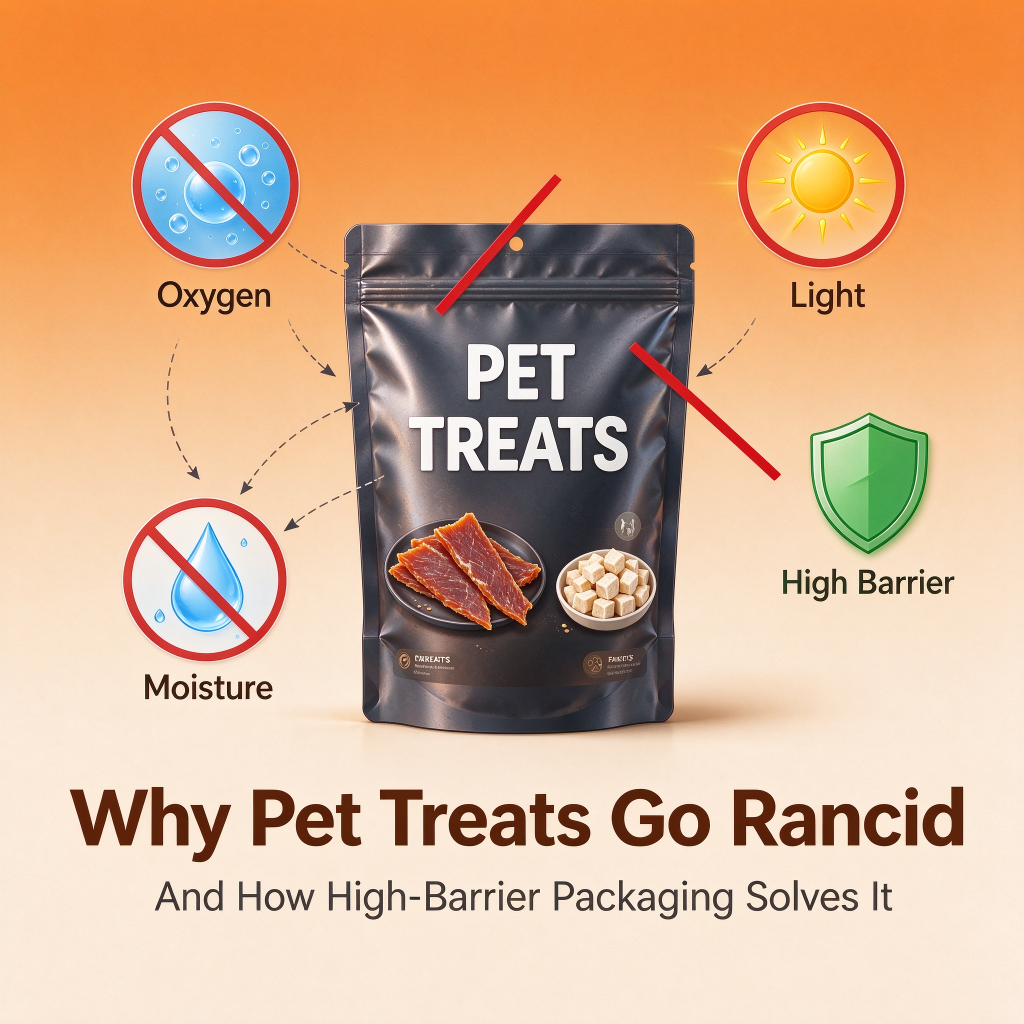
The Three Enemies of Freshness
Oxidation in pet treats does not happen by accident. It is triggered by three main factors working together:
- Oxygen — the most aggressive culprit. Fat molecules in treats react with oxygen and break down into aldehydes and ketones, which produce the rancid smell and off-flavor.
- Light — UV and visible light accelerate the oxidation reaction. Transparent packaging without any light barrier lets this happen right on the shelf.
- Moisture — humidity softens the texture, promotes mold growth, and can speed up chemical breakdown in high-protein treats.
That is why the right pet treat packaging has to block all three, not just one.
Why Standard Plastic Bags Are Not Enough
Many brands start with a simple PE bag or a single-layer film because it is cheap and easy to source. But PE alone has limited barrier performance. Oxygen molecules can pass through the film over time, and without a light barrier, the fat inside begins to break down within weeks. The result is a product that is technically still “safe” but no longer enjoyable — and in some cases, actively harmful.
For any treat that contains more than 10% fat, a high-barrier structure is not optional. It is the foundation of product quality.
The Right Pet Treat Packaging Structures
At Youpin Pack, we work with brands to match the packaging structure to the product. There is no single “best” film — only the right combination for your specific treat.
The most common high-barrier structures we recommend include:
- PET/AL/PE — aluminium foil layer blocks 100% of light and offers the strongest oxygen and moisture barrier. Best for freeze-dried treats, jerky, and long-shelf-life products.
- PET/VMPET/PE — metallized layer provides good light and oxygen barrier at a lower cost than foil. A practical choice for most snacks and treats.
- MDO-PE/PE — a mono-material, recyclable option that offers moderate barrier performance while meeting EU sustainability requirements.
- Paper/PE or Kraft/AL/PE — for brands that want a natural, kraft look without sacrificing too much protection.
Beyond the Film: Additional Protection Options
Choosing the right pet treat packaging film is only half the solution. For products that are especially sensitive to oxygen, we also offer:
- Oxygen absorbers — small sachets placed inside the bag that chemically remove residual oxygen.
- Nitrogen flushing — replacing the air inside the pouch with nitrogen during the filling process. This is standard practice for freeze-dried and high-fat treats.
- High-quality seals and zippers — a strong seal and a reliable zipper keep oxygen out after the bag is opened.
How to Choose the Right Structure for Your Product
If you are not sure where to start, ask yourself these four questions:
- What type of treat is it? Freeze-dried, jerky, biscuit, or soft chew?
- What is the fat content? Higher fat means a higher barrier requirement.
- What shelf life do you need? 6 months, 12 months, or longer?
- What is the storage environment? Room temperature, refrigerated, or frozen?
The answers will narrow down your options quickly. A pet treat packaging supplier with real manufacturing experience should be able to recommend a structure within 24 hours based on these answers.
Conclusion
Oxidation is not something pet treat brands can ignore. The wrong packaging lets oxygen, light, and moisture ruin the product before the customer even opens the bag. The right pet treat packaging — matched to the product’s fat content, shelf life, and storage conditions — keeps treats fresh, protects brand reputation, and gives pet owners confidence in every purchase.
If you are not sure which structure fits your product, send us your product type, target shelf life, and filling method. We will recommend the simplest structure that meets your requirements — not the most expensive one.
— Youpin Pack